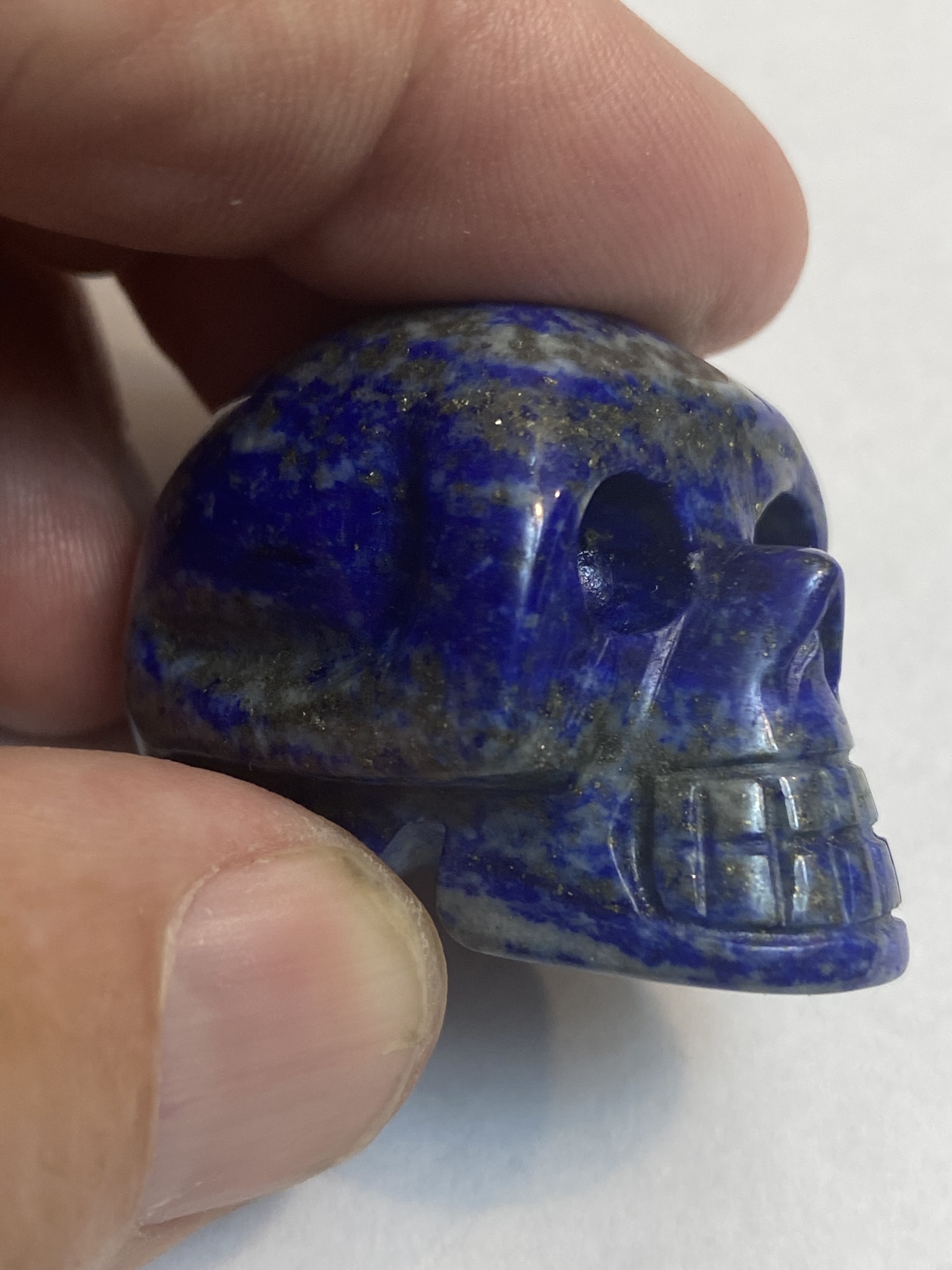
Lapis Lazuli skull
$14.00
ScientificLapis Lazuli is a felspathoid sodium/calcium aluminum silicate formed by contact metamorphism in marbles. It commonly contains calcite (white), sodalite (blue) and iron pyrite (yellow). Lazurite is t
Quantity
Online pricing always uses oprice.
Scientific
Lapis Lazuli is a felspathoid sodium/calcium aluminum silicate formed by contact metamorphism in marbles. It commonly contains calcite (white), sodalite (blue) and iron pyrite (yellow). Lazurite is the primary mineral at 25-40% also blue in color. The primary source is eastern Afghanistan and western Pakistan although other smaller deposits are found in Russia, Chile, Italy, Mongolia and North America.
Uses
Lapis is a semi-precious stone that has been used for thousands of years to create decorative items. The earliest known lapis figures were found in Bhirrana the oldest known site of the Indus valley civilization dating at about 7500 BC. Lapis beads have been found in Neolithic burials in the Caucasus, as far away as Mauritania in Northwest Africa and are prominent in the burial mask of Tutankhamun. In the middle ages it was exported to Europe and ground into powder called ultramarine finest and most expensive of all blue pigments. It was used by some of the most important artists of the time and was reserved for the clothing of the central figures in their paintings including the Virgin Mary. Lapis takes an excellent polish and today is being made into jewelry, carvings, boxes, mosaics, ornaments, small statues, and vases and other household décor, including sinks.
Meaning
Lapis Lazuli is a powerful crystal for enhancing intellectual ability and activating the higher mind thereby stimulating wisdom and good judgement. It aids in intellectual analysis, problem solving, and in the development of new ideas. It stimulates the desire for knowledge, truth and understanding, and aids the process of learning. It is excellent for enhancing memory.
image represents a group of similar stones
SKU: 2385
Stock: 0
Category: Stones
Tags: Shapes, Decor & More, Decorative, Carvings, Lapis Lazuli, Stones
Weight: 2
Size: 2 in
No reviews yet.
You Might Also Like