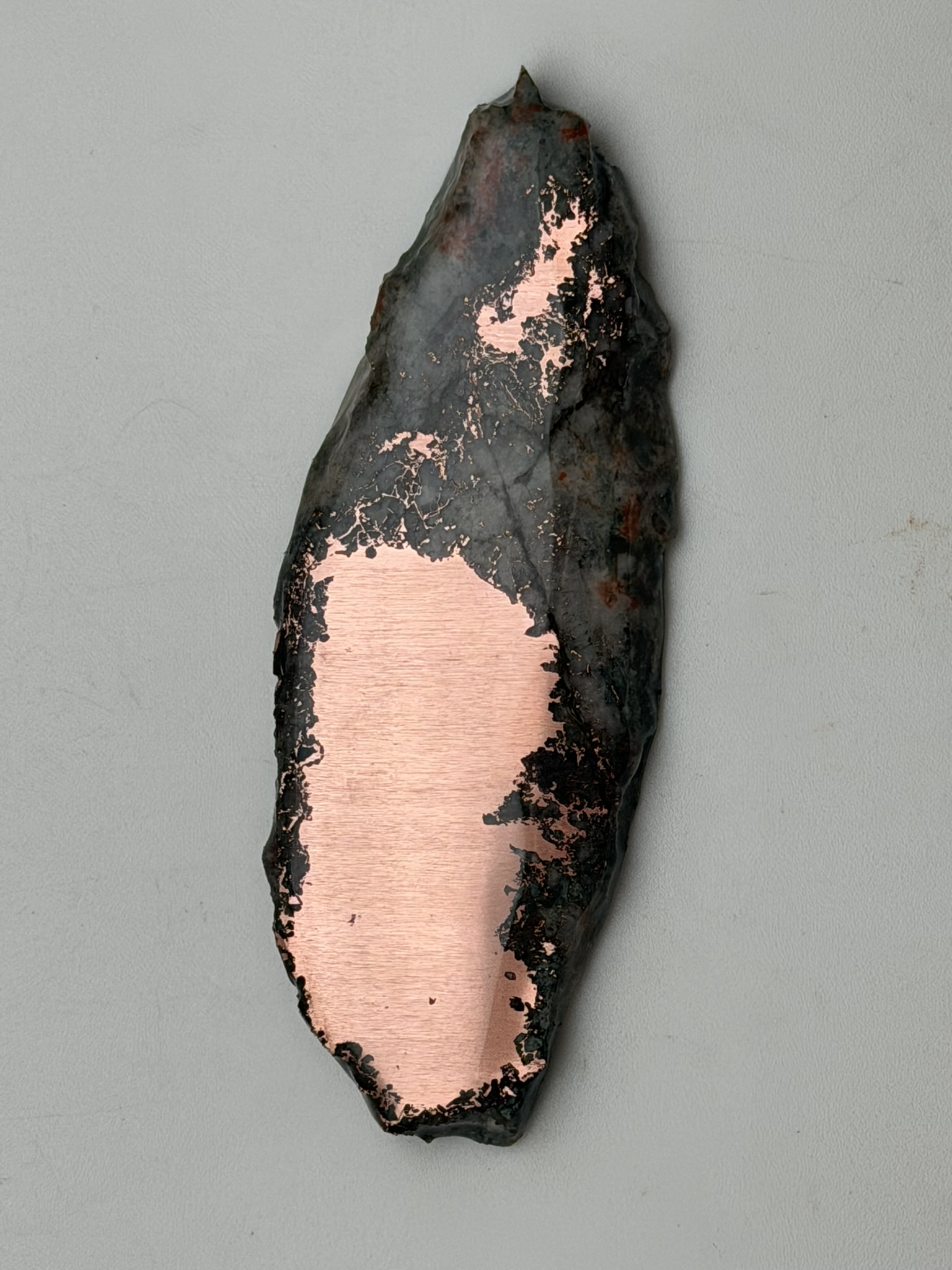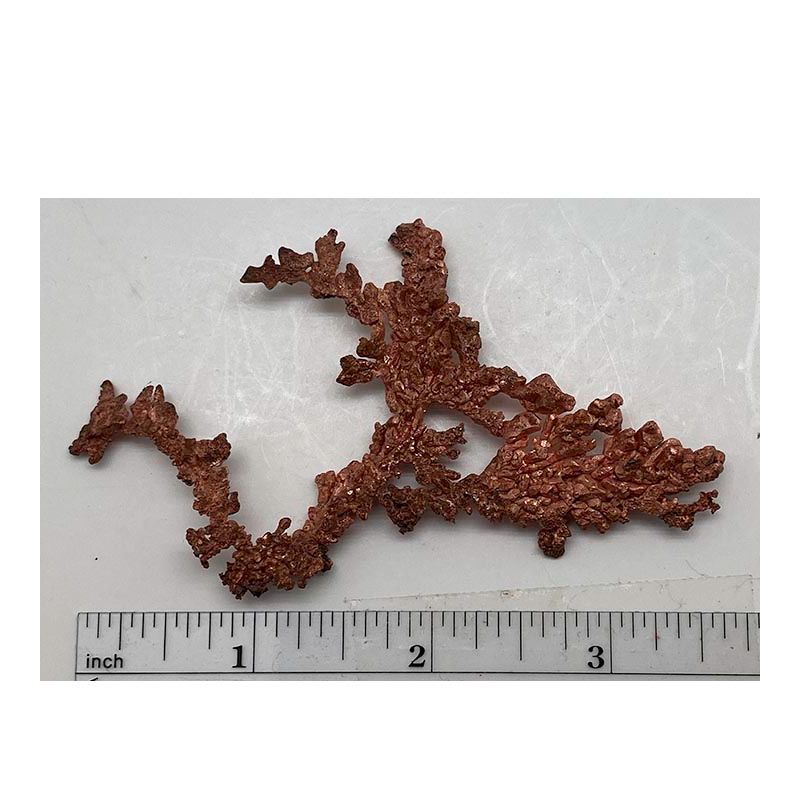
Copper, dendritic from Arizona
$130.00
ScientificCopper is found throughout the world primarily in igneous rocks and comprises about 0.6% of the rock. Copper occurs primarily as a copper sulfide (chalcocite and covellite), copper iron mix (chalcopyrite),
Quantity
Online pricing always uses oprice.
Scientific
Copper is found throughout the world primarily in igneous rocks and comprises about 0.6% of the rock. Copper occurs primarily as a copper sulfide (chalcocite and covellite), copper iron mix (chalcopyrite), copper silicates (chrysocolla), copper oxides (azurite and malachite), copper phosphates (turquois), and native copper. Each of the varieties of copper has a distinctive appearance that is easily recognizable. Pure copper melts at about 2000oF, and is easily formed by hammering, and it has high thermal and its electrical conductance is second only to silver.
Uses
Copper has many uses, only a few will be noted here. It is the third most used metal after iron and aluminum and has been known for over 8,000 years. Native copper was first extracted, and later smelted from the ore. Next tin was added to the copper to provide a harder material called bronze, which ushered in the Bronze Age. It was used as jewelry in ancient Egypt and elsewhere. Today, copper is used as electrical wire, piping, and many other applications. It has the unique anti-microbial properties and kill bacteria, viruses and yeasts on contact. As a result, copper can even be woven into fabrics to make anti-microbial garments. When used in hospitals to coat high contact surfaces, research has shown more than a 40% reduction in patients contracting antibiotic resistant diseases.
Meaning
Copper can magnify the energy transfer from the healer or crystals to the subject, provides a harmonic connection between the physical and astral bodies. It activates and opens the base and sacral chakras advancing and stabilizing various energies. It can be used to stabilize and balance blood flow and improve circulation. Because of its antibacterial properties it can be used to fight infection and in the treatment of arthritis and rheumatism and can stimulate the metabolic processes.
image represents the item listed
SKU: 928
Stock: 1
Category: Stones
Tags: Stones, Copper, Raw crystals, Shapes
Weight: 3
No reviews yet.
You Might Also Like